Stress and anxiety have become common companions in modern life. Long work hours, constant digital stimulation, and ongoing uncertainty keep the nervous system on high alert. Over time, this state of tension affects sleep, concentration, digestion, and emotional balance. While medication and therapy play an important role for many people, natural practices like yoga offer a gentle and accessible way to calm the mind and regulate stress responses.
Yoga works differently from quick relaxation techniques. Instead of forcing the mind to calm down, it uses movement, posture, and breath to signal safety to the nervous system. When the body feels supported and steady, the mind follows. This is why yoga is widely recommended for managing anxiety and chronic stress.
You do not need complex sequences or long sessions to benefit. A few carefully chosen poses, practiced slowly and with attention, can help release physical tension, slow racing thoughts, and restore emotional balance.
Below are four yoga poses that are especially effective for managing stress and anxiety naturally.
1. Child’s Pose (Balasana)
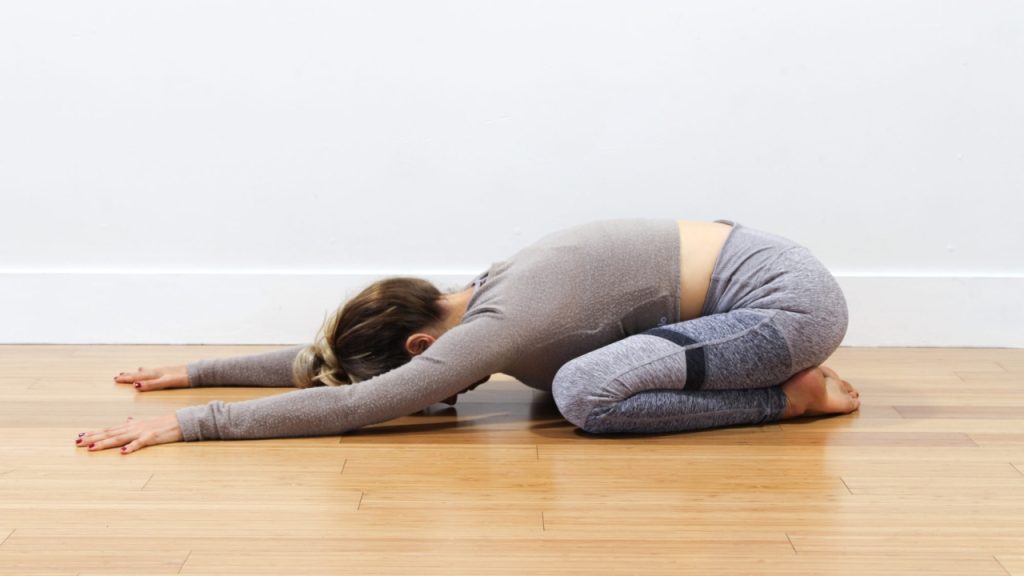
Child’s Pose is one of the most grounding and comforting poses in yoga. It gently folds the body inward, creating a sense of safety and rest. For people experiencing anxiety, this posture helps quiet overstimulation and encourages deep, calming breaths.
Physically, Child’s Pose stretches the lower back, hips, thighs, and ankles. The gentle pressure of the torso against the thighs can activate the parasympathetic nervous system, which is responsible for rest and recovery.

Mentally, this pose signals permission to pause. It slows down mental chatter and helps the body let go of accumulated tension.
“Child’s Pose reminds the nervous system that it is safe to rest, even if the mind feels busy.”
Holding this pose for several minutes while breathing slowly can significantly reduce stress levels.
Why it helps with stress and anxiety
- Calms the nervous system
- Releases tension from the back and hips
- Encourages deep, slow breathing
- Creates a sense of emotional safety
2. Cat-Cow Pose (Marjaryasana–Bitilasana)

Cat-Cow is a gentle flowing sequence that links movement with breath. It is especially effective for stress and anxiety because it encourages rhythmic breathing and spinal mobility without strain.
Physically, Cat-Cow stretches and mobilizes the spine, neck, shoulders, and back. The movement helps release tension stored along the spine, where stress often accumulates.
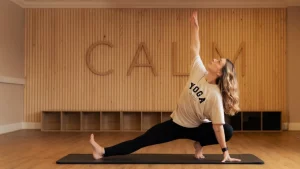
Mentally, the slow, repetitive flow creates a meditative rhythm. Coordinating breath with movement brings attention into the present moment, reducing anxious thought patterns.
“When breath and movement align, the mind naturally becomes quieter.”
Cat-Cow is an excellent pose to practice at the beginning of a session to release tension or before bed to unwind.
Why it helps with stress and anxiety
- Relieves spinal and neck tension
- Encourages mindful breathing
- Reduces mental restlessness
- Improves body awareness
3. Standing Forward Fold (Uttanasana)
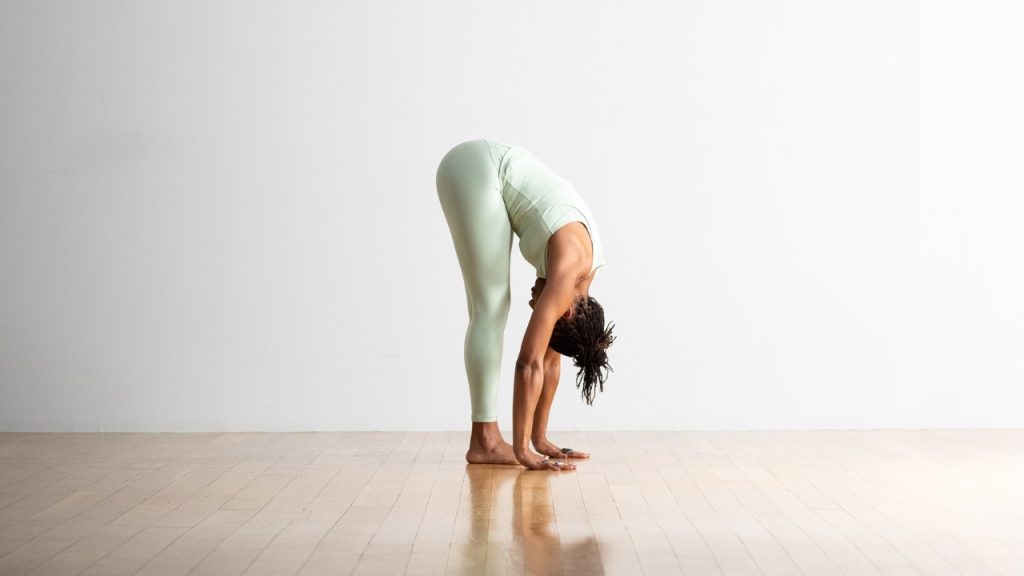
Standing Forward Fold is a calming inversion that allows the head to drop below the heart. This position can help soothe the nervous system and reduce feelings of overwhelm.
Physically, Uttanasana stretches the hamstrings, calves, hips, and spine. Allowing the upper body to hang releases tension from the neck and shoulders, common areas of stress buildup.

Mentally, this pose encourages surrender. Letting the head hang freely reduces sensory input and can slow racing thoughts.
“Forward folds quiet the mind by turning attention inward and away from external stressors.”
Bending the knees slightly keeps the pose comfortable and prevents strain.

Why it helps with stress and anxiety
- Calms the mind
- Releases tension from the neck and shoulders
- Improves circulation
- Encourages inward focus
4. Legs Up the Wall Pose (Viparita Karani)
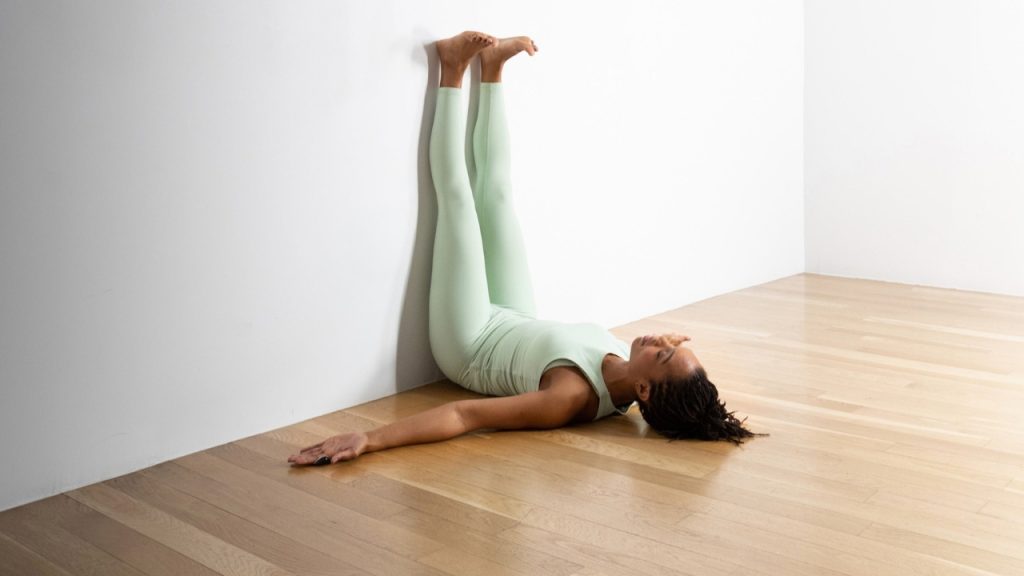
Legs Up the Wall is a deeply restorative pose that is especially effective for anxiety relief. It requires minimal effort while delivering powerful calming effects.
Physically, this pose improves circulation, reduces swelling in the legs, and allows the lower back to relax. Supporting the body against the wall removes the need for muscular engagement.

Mentally, Legs Up the Wall encourages complete relaxation. The gentle inversion helps slow the heart rate and signals the nervous system to shift into a state of rest.
“This pose teaches the body how to fully let go, which is essential for calming anxiety.”
Staying in this pose for 5–10 minutes with slow breathing can noticeably reduce stress.
Why it helps with stress and anxiety
- Activates the relaxation response
- Reduces physical fatigue
- Calms racing thoughts
- Supports emotional regulation
How These Poses Work Together?
Practicing these four poses as a sequence creates a calming flow for both body and mind:
- Child’s Pose provides grounding and safety
- Cat-Cow gently releases tension and synchronizes breath
- Forward Fold encourages mental quiet and release
- Legs Up the Wall deeply restores and calms the nervous system
This combination helps transition the body from stress mode into relaxation mode.
Tips for Practicing Yoga for Stress Relief
- Move slowly and avoid rushing between poses
- Breathe through the nose whenever possible
- Use props like cushions or blankets for comfort
- Practice in a quiet, low-light space
- Let go of performance expectations
“Stress relief in yoga comes from gentleness, not effort.”
Consistency matters more than intensity when managing anxiety.
Final Thoughts
Managing stress and anxiety naturally requires practices that support both the body and the mind. Yoga offers this support by creating a space to slow down, breathe deeply, and reconnect with the present moment.
These four yoga poses are simple, accessible, and effective. With regular practice, they can help reduce tension, calm anxious thoughts, and restore emotional balance. Over time, yoga becomes more than a stress-management tool—it becomes a steady foundation for resilience and inner calm.
FAQs
Daily practice or at least 3–5 times a week is ideal.
Yes, all poses are beginner-friendly and can be modified.
Hold each pose for 30 seconds to several minutes, based on comfort.
Yes, yoga supports nervous system regulation and emotional balance.
Yoga can be helpful, but severe anxiety may also require professional support.





Leave a Comment